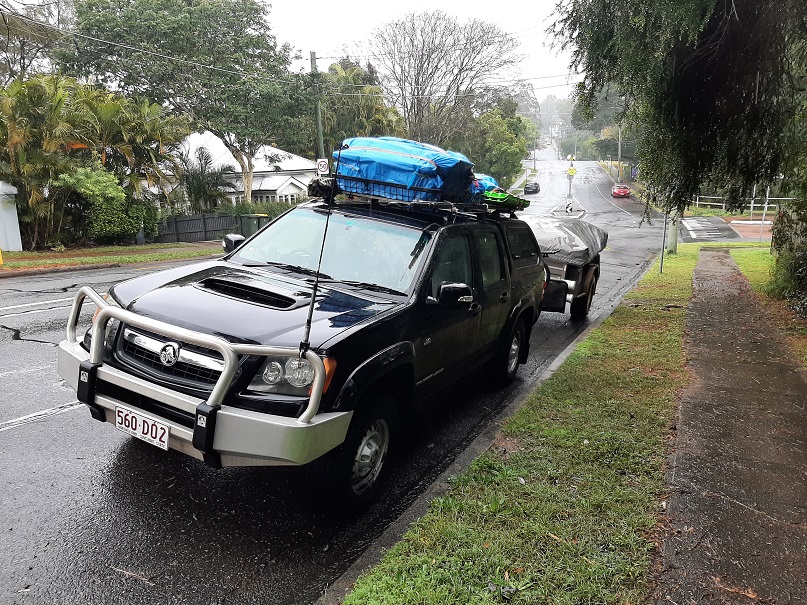
More Power!
- October 26, 2022
Some might be interested in how we keep our comfortable lifestyle on track, running a fridge, lights, electric blanket (which I will never camp without again), computers, phones and printer/scanner.
Well, to be honest, it is something which occupies a bit of my time, mainly when the sun is not shining. For the last five days we’ve barely seen the sun, and as a consequence we had no electric blanket last night.
The big upside about the cold weather is that the fridge is not taking too much power to run – we have a dual-zone 80L fridge which we run as a fridge-freezer and in hot weather it can really suck the batteries dry.
Over the years of camping I have had time to study how much power we use, how hard it is to keep power going, and how long we can survive if it decides to rain for days on end.
As a consequence of that study we upgraded a few things and expanded our battery capacity and recharging kit before we left home.
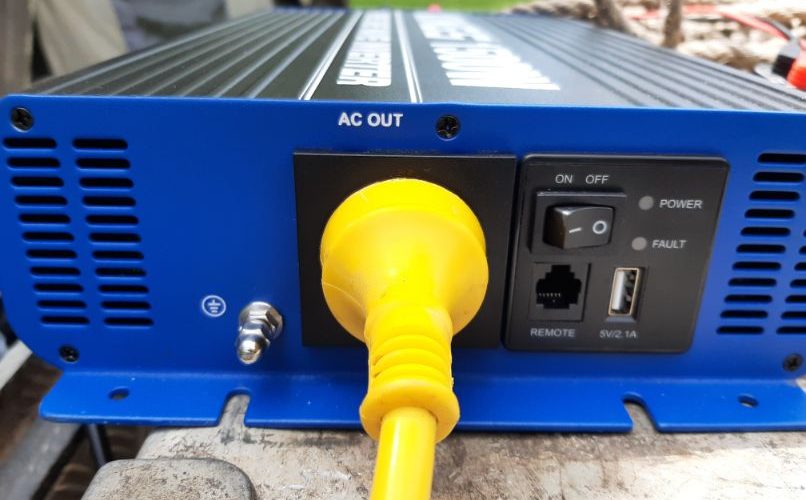
We also needed to upgrade to include a 240V inverter so that we could successfully run our computers (I have tried a computer power supply which converts directly from 12V, but the modern computers really don’t like anything but their own power supplies to be plugged in). We’re running four computers, two phones, charging camera batteries and we also have a small portable printer. All of this stuff likes 240V AC so that is where we went.
It doesn’t make good efficiency sense to be converting 12V to 240V and then back to 19V, but needs must!
We have on board three AGM deep cycle batteries – for a total capacity of 360 Amp-hours. We stuck with the AGMs rather than moving to lithium batteries for a few reasons – the recharging kit we owned already matches the lead acid batteries, lithium batteries were going to be a big cost if replacing what we already owned, and lastly I am not convinced that the cheap batteries being produced now are particularly safe. The airlines are getting a lot more cagey about transporting used lithium batteries, with their biggest fear being fire. There have been some recharging fires associated with lithium batteries, and basically that safety concern made the decision-making easier in the end.
One downside is that the AGMs are big, and so they’re squeezed in pretty tight to this battery box.
To charge everything up I was keen to get some more solar capacity, and we have three panels for a total of 370 kW of charging. That is a fair bit, but on a day like today, where we are briefly seeing the sun and looking down the barrel of a few more days of rain, the extra power makes life easier.
We have two separate voltage regulators, which enables us to move things around if needed. When we’ve camped at Straddie in the past we’ve been very happily camped in full shade, which is great for people, not so great for the solar power – so I would move the solar panels somewhere into the sun, and take a battery if needed (I have some pretty long and low resistance extension leads, but sometimes they’re not enough).
Also our third battery is not wired into the trailer, so we needed something to charge that battery up, while also charging the other two batteries.
Also, there is a current limit on both of the voltage regulators (20amps each) and with 370W of solar at 13 volts we’re at 28 amps (it doesn’t quite work like that, but rough sums were enough to tell me we needed more current capacity).
Finally for the 240V inverter I went with what was on special. We ended up with a 1500W inverter, which is way too much AC power, but it was on special and being over-spec’d won’t hurt.
When I told my friend, Ray, that I had a 1500W inverter, he scratched his chin for about a second and raised some concern about trying to run it with a deep cycle battery. A word from the wise indeed.
If I were to run something at 1500W then the 12 V battery would need to supply 125 amps (that is why they supply the inverter with such fat copper leads). 125 amps is a lot of current and is not to be trifled with. Make sure you understand what current capacity your deep cycle battery has before you go plugging in your hair dryer! Mostly they are not set up for big currents (your normal car battery on the other hand, is set up to do exactly that). The biggest computer power supply we have is 140W, so even with a couple of those plugged in, we’re not going to kill the battery.
Other special kit? The only other thing that I rely on completely every day is the $20 multi-meter. I use it to check the battery voltage (pretty regularly), which tells me how much battery capacity I have left at any particular time. My basic rule of thumb is 13V is fully charged, 12V I am starting to sweat about my beer staying cold. Lead acid batteries like to be fully charged, and they don’t respond well to be run down too low. You get a lot more life from them if you keep the charge up to them, and don’t run them down too low.
I also have a 25 year old battery charger that gets me out of trouble after a week of rain – I bought it for about $20 in 1997 and it can charge up all of the batteries despite being relatively low power – but you need some time to get them charged (mostly about 24 hours is best).


2 Comments
Well Jim, that’s as clear as MUD!!! No doubt you know what you’re talking about though??
Just watch that hair dryer!
[…] tower and get a bit of an internet boost. For the power, it’s a long and convoluted system (see Jim’s post about power) which includes solar panels, batteries and an inverter. So far, even with the limited […]
Comments are closed.